
The Star in the Sanctuary

moravianstar_bethlehem3Back in the 1830s, the Moravian community in Germany created three-dimensional stars to teach children geometry. The polyhedrons became so popular that the children used them as lanterns during the church’s Advent festivals.  The community found great beauty in the stars’ simplicity and plainness. The stars became an international craze as craftsmen soon began to manufacture them in a variety of mediums such as wood, metal, and glass. Today, Moravian stars grace both homes and churches throughout the world often in anticipation of Christmas and Epiphany.

For years, the Ardmore Presbyterian Church has hung a Moravian star in the sanctuary during the Advent season. Many have fond memories of volunteers hanging the star on Advent Family Night while the children sang songs of the season. In 2012, that tradition was interrupted. A number of mechanical complications told us that we needed an update. This year, thanks to your donations to the Memorial Fund, we mark the return of the Moravian star. It’s bigger now which should make it more visible throughout the sanctuary.

What was once a tool to teach mathematics is now a tool to teach of God’s loving pursuit of humanity. Many know the story of the star of Bethlehem from Matthew 2. Magi from the East had been watching the skies, and there they discovered signs that a new king had been born in Israel. A star appeared which pointed the way. The Magi, after making a quick stop in Jerusalem, went to Bethlehem where they found the baby, Jesus. They offered him tribute, gifts fit for a king, and they worshiped him.

The Magi were not Jews. One might think that they would have little care or concern about a baby born in a small village in Israel. However, God’s plan, which culminated in Jesus Christ, included both Jew and Gentile. God loved the entire world. God desired the reconciliation of heaven and earth. This message was for all nations, all languages, and all races.

The star of Bethlehem shows how God is willing to take that good news to all peoples. Here, God appropriated the Magi’s culture to give them a sign that they would understand. In a sense, God spoke their language, and he sent them to Jesus, the Savior of the world.

The star that hangs in our sanctuary this Advent should remind us not to hide from the world. Instead, we should engage the culture with a beautiful message of grace and forgiveness. As the star was God’s ambassador to the Magi, we become God’s ambassador to our neighbors. We speak their language. We meet them where they are. We act with mercy and compassion drawing them closer to the one born in a manger.

Merry Christmas.

James Hodsden
World Communion Sunday

Since the beginning of the Christian faith, the Church has gathered to celebrate the Lord’s Supper. In that meal, we remember the sacrificial love of Jesus Christ. We offer thanks for the grace that we have received, and we celebrate our unity as God’s children.

rev_kerr_40s
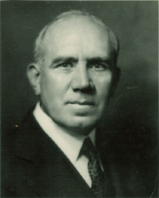
Rev. Dr. Hugh Thompson Kerr

In the 1930s, Rev. Dr. Hugh Thompson Kerr was pastor of Shadyside Presbyterian Church in Pittsburgh. Lamenting the great divisions within the Christian community, he proposed establishing an annual celebration of Holy Communion as an encouragement to cooperation among Christians. In 1936, the Presbyterian Church (US) adopted this celebration denomination-wide, and World Communion Sunday was established on the first Sunday of October.

At the time, Presbyterians invited other denominations to share in World Communion Sunday. However, churches were reluctant to join. It wasn’t until World War II that many saw the need to come together in a world being torn apart. Today, many Christian denominations world-wide celebrate World Communion Sunday including Ardmore Presbyterian Church.

communionFor the past several weeks, we have emphasized that our congregation is a worshipping community. More than that, we have declared that worship can be transformational. God can use our practices of worship to change us for the better. Communion is a reminder that we don’t do this by ourselves. The Christian faith has never been about sitting alone in the corner having spiritual thoughts.

Back in the New Testament, the church in Corinth had forgotten this truth. Paul noted that when they gathered for communion, “one goes hungry and another becomes drunk” (1 Corinthians 11:21). Rather than sharing a meal together, the Corinthian church treated communion as a free-for-all. Members grabbed what they could, and some were left out.

God’s vision is bigger than that. We have a responsibility to one another. We bring our best, and we encourage others to bring their best to God. We volunteer in the church’s ministries in order to help the entire community. Our choirs, Sunday School program, and even Saturday Shine-up help us serve everyone who wants to experience the transformation found in Jesus Christ. Yes, we dedicate even our monetary gifts to this purpose. Think of our annual stewardship drive as a pot luck dinner in which our offerings are given to God. Those moneys ensure that the congregation and beyond are spiritually fed.

My prayer for this World Communion Sunday is that our connections to God and to each other are strengthened.  As we break the bread and share the cup, may our lives be a demonstration of our unity in Jesus Christ.

Grace and Peace,

James Hodsden

A New Beginning

0a010f6fe0c4011d76634d733d50ce59Perhaps, I have been conditioned by all those years of education. For me, September has always seemed a better start of the year than January. I have never been the type to make resolutions when the ball falls in Times Square in New York City. Instead, I always made mine after Labor Day on the first day of school. For some reason, brand new spiral notebooks and unsharpened yellow pencils inspired optimism in me. Maybe I’m weird, but new pencil boxes, new scissors and a new bottle of glue suggested that life has limitless possibilities. The slate was wiped clean, and life began anew.

The new program year starting on Homecoming Sunday, September 8th, will certainly be an exciting one. The leaders, staff and volunteers are working hard to develop faithful ministries that encourage the congregation to go deeper in our faith. As we offer prayers, study Scripture and sing praises, we will take part in God’s new beginning. And when things don’t go according to plan, God’s kept promises sustain us long after all those new erasers are gone. Together we will comfort one another in the home found in Jesus Christ.

Just like kids on a new playground, God gives us new friends and new opportunities to serve others. In a sense, God is handing each of us a new box of sixty-four crayons — the one with the sharpener in the side. Just imagine what we can create together. Come be a part of God’s new beginning at Ardmore Presbyterian Church.

Grace & Peace,

James Hodsden

Jack Denton, Requiescat in Pace

mainlinemedianews_denton_20130727At the time of his passing, Jack Denton was 101 years old. He was the oldest member of Ardmore Presbyterian Church and a fine Christian gentleman. When he could no longer come to worship, APC maintained a relationship with him through our lay visitation ministry. Spending time with people like Jack can be very rewarding. I encourage you to contact the church office to find out how you can spend time with our seasoned saints.

The following words were shared by me at Jack’s funeral:

Before Jim Young passed away a few years ago, he was an elder in the Ardmore Presbyterian Church. One of the ministries that he greatly enjoyed was picking up people to bring them to worship on Sunday. The Quadrangle was a frequent stop, and he came to know Jack Denton. Jim had a great deal of respect for Jack, and even after Jack stopped coming to church, Jim continued to visit. On one visit, Jack told Jim that he and his son had recently traveled to some retirement communities. They evaluated the facilities and spoke with some of the staff.  Jim was a little perplexed. “Jack, you are already living in a retirement community.” And Jack responded, “Not for me, but for my son.”

There are several members of Ardmore Presbyterian Church who have fond memories of visiting with Jack Denton.  I count myself among them. Those visits weren’t necessarily memorable for the conversation although Jack was always intelligent and witty. They were memorable for the man who Jack Denton was. He was decent, kind and considerate. There was a warmth about him. Even when facing adversity, Jack was cheerful and faithful. People would tell me that they went to bless Jack with their time, but afterwards, they find that they themselves received the blessing.

At 101 years old, Jack was the oldest member of the church. He saw two world wars, a Great Depression, and the devastation of September 11, 2001. Jack experienced profound technological and social changes. Many were positive. Some were negative. Looking back, Jack always expressed surprise at his age. He couldn’t believe it. When Jack was young he had many health concerns. In fact, life insurance companies would turn him down for a policy suggesting that he was a bad risk. Jack personally showed all the actuarial tables wrong.

More recently, Jack became a bit frustrated that he was still around. He missed his wife terribly, and almost all of his friends were gone. He was never doubtful or unfaithful, but he asked God why God wouldn’t call him home. I told him once that maybe even at 100 or 101, God still had work for him to do. Jack listened kindly, but clearly, he couldn’t fathom what that job might be. Then some hospital aide barely twenty years old would come into his room and announce what a profound impact that Jack’s short time there had on her life.

One might think that Jack was simply a product of his age. People were attracted to him because he represented something from a by-gone era. Our society truly is coarser, and civility is in short supply, and Jack’s emphasis on manners was indeed refreshing. However, there were rogues and scoundrels among those born a century ago.  Jack’s decency was not generational. It went deeper.

Jack’s love for God defined him. He knew the Scriptures inside and out. He wanted to live out his faith. He didn’t just want to recite a creed. Jack was active in the church. He gave his time, his talent and his treasure. Jack almost became a minister, but his Christian witness probably reached more people at the insurance company where he worked. His own children claim that he never fought with his wife. His marriage was a 49-year honeymoon. Jack tried to raise his own children with love and discipline.

Jack wasn’t arrogant. Instead, he had a humility that knew that God’s love was undeserved. Jack had his own sins and temptations, but he relied on the forgiveness that comes from Jesus Christ. Jack’s favorite Scripture was the 23rd Psalm. It describes a God who cares for us and walks with us throughout life: “The Lord is my Shepherd. I shall not want.” In fact, that God walks with us beyond “the valley of the shadow of death.” Jesus rose from the dead secures for us a victory over the evils of this world. Because Jesus prepares a place for us, we may “dwell in the house of the Lord forever.”

Many of us are tired of a world in which the arrogant prosper. Jack showed us that there is a more perfect way. He gave us a witness that God is alive and willing to see us home.

Grace and Peace,

James Hodsden

Vacation Bible School


churches_third_pres_bible_report

At the beginning of the Twentieth Century, the church in the United States was wrestling with a dramatically new social situation. Cities swelled with new residents from the countryside. Families were leaving farms looking for a better life in places like Philadelphia, New York, and Chicago.

Urbanization brought with it large social problems. There were the usual difficulties of overcrowding, poverty and crime, but also communities were losing social cohesion. The ties that bound one another together were being weakened. Institutions such as the church were ill-equipped to deal with the changes.

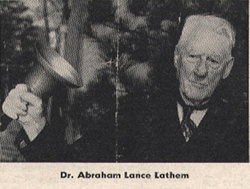
lathem03Around 1910, Pastor Abraham Latham at the Third Presbyterian Church in Chester, Pennsylvania, noticed that his denomination, the Presbyterian Church in the United States of America, was losing around 50,000 members a year. This reality grieved him, and he decided that he would do something about it. He would start with the children. He believed that a good foundation in the Bible would prevent them from falling away in the future.  Rev. Latham began to teach the Scriptures in the summer when schools were on break. Thus, he started the Vacation Bible School.

There are others who also claim to have invented the Vacation Bible School. Perhaps, they came up with the idea independently and about the same time. In each case, Christian leaders believed that the challenges of the day could be addressed by the gospel. The idea quickly became so popular that Standard Publishing printed its first Vacation Bible School curriculum in 1923. Ardmore Presbyterian Church held its first Vacation Bible School in 1926.

At the beginning of the Twenty-first Century, we are still gathering in Fellowship Hall, singing God’s praises and teaching the stories of Jesus. Things certainly have changed over the years. Our teaching methods are a bit different. Technology has brought dramatic new possibilities.  Still, we face many of the same challenges. Communities are still looking for what brings them together. Our children still need a good foundation in the Bible.

Please join the Ardmore Presbyterian Church June 17-21, 2013 as we engage in the dynamic tradition of Vacation Bible School. We will give our children an experience of God’s love in a fun and safe environment.  There will be crafts, games, songs and stories.

Then join us for worship on Sunday, June 23, 2013 when we bring Vacation Bible School into worship. We will share some of the songs that you sang growing up, and we will tell again the stories of Jesus and his love. The gospel still has something to say to our children and our families if we are willing to listen.

Grace and Peace,

James Hodsden

Check out these links…

  • The history of the Summer Bible School at Third Presbyterian Church in Chester.
  • The curriculum that Rev. Lathan used for that early Vacation Bible School.


“Do Not Let Your Hearts be Troubled”

cross-on-hillDo not let your hearts be troubled…” (John 14:1a)
In the midst of bombings in Boston and devastation in West, Texas, Jesus’ words are hard to hear. In the past several months, we have seen terrorists raze a consulate in Benghazi and a killer shoot schoolchildren in Connecticut. Our economy remains sluggish, and many struggle to find a job. The culture itself is in the midst of turmoil. Many are worried what this brave new world might mean for our children. Whether our anxieties are self-created or thrust upon us, Jesus declares that we should not be troubled.

However, Jesus is not a blind optimist. He’s not asking us simply to reflect on the sunny side of life. There are real problems. Sometimes life can be awful. Jesus shares these words with his disciples on the night of his arrest.  Jesus has just declared to Peter that he will in fact deny him three times. Judas will soon betray his teacher by a kiss, leading the soldiers to take Jesus away. Jesus is going to experience ridicule, torture and death. Still, he tells the disciples not to be troubled.

However, that’s not all Jesus tells them.

“…Believe in God, believe also in me. In my Father’s house there are many dwelling places. If it were not so, would I have told you that I go to prepare a place for you? And if I go and prepare a place for you, I will come again and will take you to myself, so that where I am, there you may be also. And you know the way to the place where I am going.” (John 14:1b-4)

Instead of being troubled, place your hope and trust in God and also in Jesus Christ. Jesus himself prepares a place for us. The difficulties we face are only temporary. Ultimately, God’s justice will prevail. Humanity’s inhumanity will be defeated.

However, Jesus’ words do not give us permission to hide until the storm is over. We can’t barricade ourselves in our churches or our homes ignoring the problems of the world. Having confidence in what Christ will accomplish means that we have the freedom to help.

“Thomas said to him, ‘Lord, we do not know where you are going. How can we know the way?’ Jesus said to him, “I am the way, and the truth, and the life. No one comes to the Father except through me.”  (John 14:5-6)

The only “way” we have in this life is the way of Jesus Christ. The hatred of this world will pass away. The suffering of the innocent will end.  For right now, they remain. Following in the way of Jesus, right now we are here to heal, to comfort, and to do justice. In the midst of the chaos, we will be standing in truth offering God’s love to those in need.

Grace and Peace,

James Hodsden

Make Room

lentRecently one of the youth of the congregation asked me a question, “Do you know what Pope Benedict gave up for Lent?” I must admit that I fell for the joke, “No, I don’t. What did he give up?” The answer of course was “His job.”

Forty days before Easter, the Church celebrates the season of Lent. To the casual observer, Lent is about giving up something. Some hide from sugar or caffeine. Others avoid swear words or checking their Facebook page.  At one time, the practice of giving up something was exclusive of the Roman Catholic Church, but now Protestants and even some outside the Christian faith take up Lent through self-denial.

Whether it is brain chemistry or collective cultural memory, human beings have a deep seated longing for something beyond ourselves.  Giving up chocolate for forty days might seem a silly way to manifest spiritual desire, but don’t judge so quickly.  We don’t want to just stand there.  We want to do something.

In Matthew 6, Jesus gives some very practical advice:

“Beware of practicing your piety before others . . . when you give alms, do not let your left hand know what your right hand is doing. . . . When you are praying, do not heap up empty phrases as the Gentiles do . . . And whenever you fast, do not look dismal, like the hypocrites . . . store up for yourselves treasures in heaven . . .”

Our spiritual practices can be selfish. Our longing for the divine can be warped. Even the most “spiritual” part of our lives is subject to sin. We may give alms out of our own pride. We may pray to be heard. We may fast to be seen. We may give up junk food out of self-righteousness.

Ultimately, we should realize that our practices will not get us closer to God. Instead, it is God who moves closer to us. The forty day march of Lent leads right to the cross. Here, God declares the insufficiency of all our efforts.  God alone, by the sacrifice of Jesus Christ, reconciles heaven and earth. Our spiritual longings are only satisfied in what Jesus accomplished.

Why should we give to the poor? Why should we pray? Why should we fast? Instead of giving up something for Lent, this year let’s make room. Make room for Jesus. Make room for God to work his reconciliation in your life.  Examine yourselves. Each of us knows things in our lives that prevent us from living a life renewed by Jesus Christ. If it is a grudge that I have held for many years, make room for Jesus. If it is the fact that I don’t take time to read the Scriptures, make room for Jesus. If it is cigarettes, make room for Jesus.

When we fast or pray or give, we free ourselves to be the person that God wants us to be. If I am not stuffing my own mouth, I am free to share with others in need.  If I am praying for my enemies, I am free from hate. If I am giving to others, I am free from the idolatry of my possessions. For that matter, making room for Jesus is not about forty days. Making room for Jesus is about a new life lived in faithfulness. As we prepare for Easter, let’s not give into self-righteous denial, but instead make room for the risen Savior.

Grace and Peace,

James Hodsden

Spiritual Self-Contradiction

motherteresa_094“I am told God loves me—and yet the reality of darkness and coldness and emptiness is so great that nothing touches my soul.”
These are the words of Mother Teresa in a prayer to Jesus as reported by Time magazine.  The excerpt comes from a larger collection of letters and papers entitled, Mother Teresa: Come Be My Light.  When the book came out in 2007, a decade after her death, the press coverage suggested a scandal.

The talking heads on the cable news shows clucked that Mother Teresa was a hypocrite.  Here was a woman who dedicated her life to God. Nonetheless, she often wandered in a spiritual desert.  She had days, rather years, in which God seemed silent.  The author of that Time article suggests that Teresa’s life presents “a startling portrait in self-contradiction.”

I only knew Mother Teresa through her public persona.  She was born in Macedonia and began her ministry in India at the age of 19.  There she ministered to the poor and dying of Calcutta in the name of Christ.  I cannot speak to her inner spiritual life.  I am in no position to judge.  However, is it possible to follow God and not feel God’s presence?

“My God, my God, why have you forsaken me? Why are you so far from saving me, so far from the words of my groaning?” (Psalm 22:1)

The psalmist believes that the answer is yes.  In fact, Jesus himself speaks the psalmist’s words from the cross.  Faithfulness does not mean happiness all the time.  Discipleship can be accompanied by sorrow, silence, and suffering.

Human beings are emotional creatures. Our emotions can bring a passion and intensity to all of life.  We should not neglect our feelings.  Nonetheless, the love of God does not change when we cannot perceive it.  We are saved by God’s grace in Jesus Christ, not our feelings.  We must rely on the promises of the Scriptures and the collective faith of the church to sustain us when our own individual faith seems insufficient.

If you have never experienced the “self-contradiction” of spiritual dryness, count yourself blessed.  If you are like the rest of us, do not despair.  Bring your fear, anger, and doubt to God.  Raise your concerns, and ask your questions.  Wrestle with God, and even ask for a blessing.  In the end, know that we belong to our faithful Savior, Jesus Christ, even if we cannot feel it.

Grace and Peace,

James Hodsden

“Yes, Virgina, There Is a St. Nicholas”

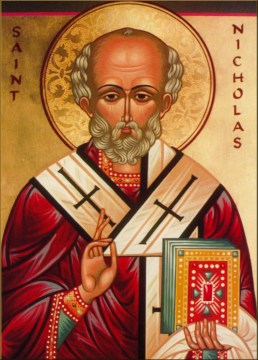
saint-nicholas18Last December, Thomas and I caught the end of a Christmas animation  special on television. When I think of animation and Christmas, I usually think of islands of misfit toys and boys with blankets quoting the gospel of Luke. However, this cartoon was different. Santa Claus rode a rocket sleigh propelled at dizzying speed by eight robot reindeer. Although there was no discernible plot, there were plenty of explosions and battle scenes. It’s as if the Power Rangers were given the opportunity to rewrite “A Visit from St. Nick.” What a long strange trip it has been.


Long before being a pop culture icon, before being a huckster for rampant commercialism, before being “a jolly old elf,” Santa Claus was simply Nicholas. The boy grew up in the third century in Patara, a small village in what is now modern Turkey. Born and baptized into the Church, his parents raised him to be a devoted follower of Jesus Christ. While still young, his parents died during an epidemic, and left him a small fortune. Moved by his faith, Nicholas used his entire inheritance in a ministry of compassion. In the name of Jesus Christ, he helped the needy, the sick, and the suffering. While still young, he became a leader in the church and was made Bishop of Myra. He was a leader of steady convictions which drew him into conflict with      Roman authorities. Under the Roman Emperor Diocletian, Nicholas was exiled and imprisoned for his faith. In better times, Nicholas attended the Council at Nicaea in 325. There he and the other bishops hammered out a statement of faith accepted universally by the Church that Jesus Christ is fully human, fully divine.

Over the years, Nicholas’ story has become encrusted with fantasy, hype, and cultural baggage. Much of it is harmless fun, like stories of giants and beanstalks. In the process, however, we lost a great man of compassion, faith, and conviction. Nicholas belongs to the Church, he belongs to us, and his example is a witness to Jesus Christ. Tell Nicholas’ story. Share it with your children and grandchildren. Receive this Christmas season a visit from old St. Nick.

To Boldly Go

[Spoilers ahead. I know most who care about Star Trek have seen the movie, but just in case, here is your warning.]

kirkandspock

GROWING UP TREK

Growing up in the 1970s, Star Wars was supposed to be the cultural icon of my generation of geeks. I did have the Star Wars action figures, and I can quote from the climactic scenes: “Luke, you switched off your targeting computer. Is everything all right?” Still, my heart has always been with Star Trek. I grew up on the reruns, and the show has shaped my outlook and temperament. I identify with the optimism and democracy that the series championed. I would guess that my sense of politics is still greatly influenced by this show born in the light of John F. Kennedy’s New Frontier.

Let’s just accept the fact that Star Trek is not high art. Plot holes and inconsistencies abound despite the best efforts of the wiki-nerds working by the internet glow deep within the mines of Janus VI. Instead, Star Trek is primarily a clunky morality play with phasers and giant Styrofoam rocks. Behind most of the shows and movies, there were messages about hard choices, human fallibility, and realpolitik. Think Reinhold Niebuhr with warp drive.

Even the bad episodes or movies had an intriguing idea behind it. Remember the fifth film, The Final Frontier? It was hailed as one of the worst of the franchise. We got T.J. Hooker-style action sequences and Uhura fan-dancing. Beyond the cringe-worthy aspects, the crew also searches for God, and the god that they find isn’t what they expect or want. Great idea. Poor execution.

Kirk and Spock are the central figures in the show. The interplay between these two characters was the heart of the original series, and a recent blog post by Mark Finn made me think about my own connection. Finn writes, “Captain Kirk, without a doubt, went into the alchemy of what I thought constituted Being A Man.” Interestingly enough, Kirk was not my model of masculinity. Spock was. Friends in high school said I was a Vulcan, and I took it as a badge of honor. For me, Spock represented rationality, duty, discipline, and devotion to a higher ideal. Nonetheless, Spock is not complete without Kirk. The two need each other. As Spock wrestled with the duality, I did too.

Although the theme is present in many of the episodes and movies, a few examples might clarify. In Star Trek: The Motion Picture, Spock refuses to complete the kohlinar, the purging of all emotion leaving only pure logic. In the same movie, V’ger serves as Spock’s counterpart. The probe is programmed with a simple mission “to know that all is knowable.” Without the human component of imagination, intuition, etc, V’ger cannot complete its mission. Likewise, Spock needs the human Kirk with his irrational passion.

Kirk also needs Spock. In Wrath of Khan, much is made about Kirk cheating the Kobayashi Maru test, the “no-win” scenario. The test is an affront to everything that Kirk believes. Like Odysseus or the biblical Jacob, Kirk is not beneath employing trickery and deception to achieve his goals. He cannot accept his limitations, and thus he is susceptible to hubris. At the end of the movie, Spock lays down his life for the crew of the Enterprise. He tells Kirk, “I never took the Kobayashi Maru test until now. What do you think of my solution?” By allowing the needs of the many to outweigh the needs of the few, Spock redeems the lives of the crew with his own. Kirk finally faces his own finitude through the death of his friend.

kirkandspock2

STAR TREK REIMAGINED

All this is background for my thoughts on the new Star Trek movie by J.J. Abrams. Weeks after the release of the film, a friend greatly encouraged me to go see the film. So I finally took a look. The casting is superb. There are enough nods to the original series that even the most hardened fans will smile. There are plot holes, but no more than usual. Many have complained that J.J. Abrams took major liberties with the canon of the Star Trek universe. He did, but for some reason, it doesn’t bother me.

Nonetheless, I still have concerns. If we accept a Freudian analysis, J.J. Abrams’ prefers Kirk’s id to Spock’s super-ego. Several times, Spock learns that his logic is insufficient. Due to circumstances involving his home world, the young Vulcan grows up quickly. By the end of the movie, Spock rejects logical action in favor of pure revenge. In itself, that’s not necessarily a terrible thing, but Kirk, on the other hand, gets rewarded again and again for acting like a space-age James Dean. Kirk never pays for his hubris. That bothered me. Perhaps, I am too sympathetic to Spock. Perhaps, Abrams just doesn’t understand the irony at the heart of Star Trek. I assume that there will be more films. I just hope that in future movies Kirk finally gets his comeuppance.