The Arc of the Moral Universe

220px-martin_luther_king_jr_nywtsI turned on the radio this morning to learn that the terrorist group, al-Shabaab, stormed a college campus in Kenya. Christians were shot on the spot. As of this writing, the Muslim extremist group is holding several hostages.

Such news breaks the heart, but it’s not uncommon. Injustice, hatred, and suffering seem to be all too prevalent. Thankfully, most of us will not face such horrible circumstances, but in reality, we all have tasted the bitterness of this world. Some have it worse than others. How in the world do we keep from falling into cynicism and despair?

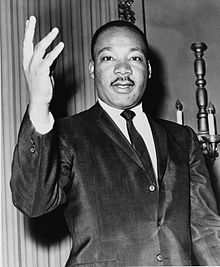
Martin Luther King, Jr. reflecting on the setbacks of the Civil Rights Movement once declared, “The arc of the moral universe is long, but it bends toward justice.” It is meant to be a comfort to those in the middle of the struggle. Yes, the difficulties that we face are great, but have hope. Justice will eventually prevail. The words sound as if they carry the weight of scientific fact. As certain as the law of gravity, the universe is pulled toward justice. It is written into the original programming.

I appreciate the sentiment, but can we trust it? The ongoing experiment called life seem to suggest entropy, not order. The overwhelming evidence suggests struggle. One set of interests is pitted against another. A third finally prevails only to be replaced by another. Victory justifies both means and ends.

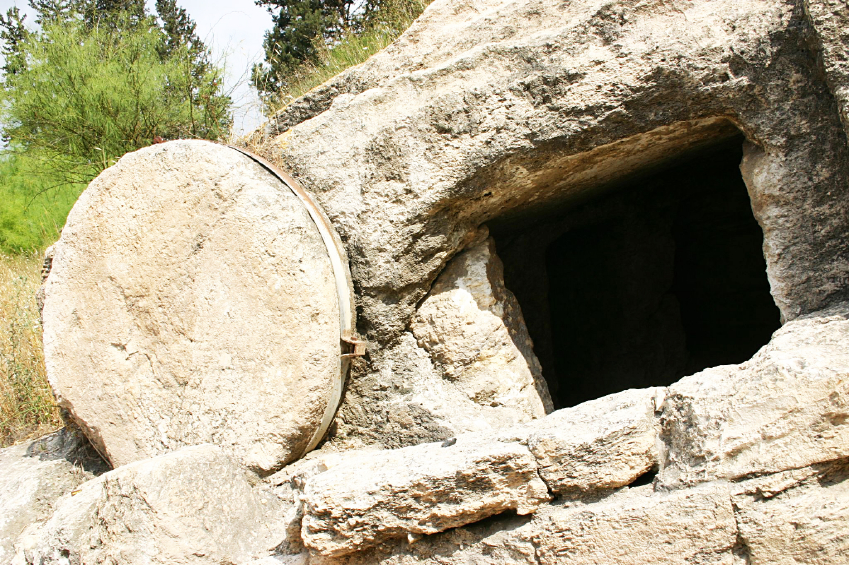
I’m not sure where others go to avoid falling into a nihilistic abyss. For us as Christians, the story of Jesus Christ is confirmation that God is not dead. Jesus Christ was crucified. He was dead and buried. He was another innocent victim in a history of innocent victims. However, contrary to all expectations, he rose. The empty tomb affirms that Martin Luther King, Jr. was correct. The world does makes sense, even when our lives don’t.

Easter is not about bunnies and baby chicks. The new life of spring will eventually give way to decay and death. Instead, the resurrection of Jesus Christ is God’s declaration that truth, life and love are the way the world works. Even on a personal level, we know that injustice, suffering, and death are only temporary. As followers of the risen Christ, we live each day with courage working for God’s justice.

Christ is risen. He is risen indeed.
Luck Has Nothing to Do With It

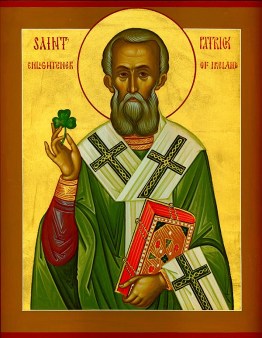
0317patrick-irelandI don’t think I have a drop of Irish blood coursing through my veins.  Nonetheless, I will be beaming with pride this St. Patrick’s Day.  I won’t be drinking green beer or wearing a “kiss me I’m Irish” button.  I won’t be looking for leprechauns or pots of gold at the end of the rainbow.  What I will do is offer a little prayer of thanksgiving for Patrick, the evangelist of Ireland.  Here was a man of strength and passion, yet also humility.  He grew up in a Christian home in England, on the outskirts of the Roman Empire.  Patrick’s father was a deacon in the church; his grandfather was an elder.  He was baptized in the church, and like some who grew up in the church took his faith for granted.  At less than sixteen, he was kidnapped during a pirate raid and taken to Ireland.  He was made a slave, and in this crisis, he rediscovered his faith.  Patrick writes, “And my soul was restless within me so that in a single day I would say as many as a hundred prayers, and almost as many in the night…”

After six years, Patrick heard a voice in the night directing him to escape.  Following the voice, he made his way to the coast and obtained passage on a ship bound back to England.  His family welcomed him home, but somehow he remained restless.  In England, he dreamed that the Irish were calling him back, not as a slave, but as one who proclaimed the good news of Jesus Christ.  Patrick trained for the pastorate, and he returned to Ireland.  His Latin was never very good.  His writing style was never very accomplished.  Patrick called himself an “ignoramus.”  Despite these shortcomings, thousands came to know Jesus through Patrick’s preaching and teaching.  Patrick loved the Lord, loved the Scriptures, and loved the Irish.  Through Patrick, God brought about the peaceful conversion of many of the warring tribes of Ireland.  In a few generations, Irish warriors with the skulls of their victims hanging from their belts were replaced by Irish monks with copies of the Bible and the Church Fathers hanging from their belts.

Ever since I heard his story, Patrick has been a hero of mine.  His love, his compassion, his humility, and his missionary zeal are lessons for all Christians.  We don’t have to be Irish to claim Patrick, just Christian.

Grace and Peace,

James Hodsden

“Kronos” vs. “Kairos”

clock-e1422558201192On multiple frequencies, twenty-four hours a day, 365 days a year, the radio station WWV out of Fort Collins, Colorado broadcasts a simple message.  Every second there is an automated click, and at the top of every minute there is an announcement of the time and a tone. In 1945, the announcements were in Morse code.  By 1950, a voice replaced the dots and dashes.  Synced with the United States Naval Observatory, WWV provides the standard for the measurement of time.

In high school, I remember listening to WWV on a shortwave radio. It was one of the few stations that I could actually hear. For me, its simple monotony represented the march of time. Seconds become minutes. Minutes become hours. One event happens right after another. The Greeks had a word for this understanding of time. They called it, “kronos” (κρόνος). It’s where we get words like “chronology” and “chronicle.” In the Bible, we encounter it in verses like Matthew 2:7:

“Then Herod secretly called for the wise men and learned from them the exact time (κρόνος). when the star had appeared.”

However, the Greeks had another word for time called “kairos” (καιρός). Where “kronos” meant time as you measured it on a clock or a calendar, “kairos” was associated with the meaning of time. In a sense, “kronos” is quantitative, and “kairos” is qualitative. For example, December 25 is the “kronos” of Christmas. On the other hand, the “kairos” of Christmas is gathering together, lighting candles, and celebrating the birth of Jesus. In the Scriptures, we encounter “kairos” in verses like Mark 1:15:

[Jesus said,] “The time (καιρός) is fulfilled, and the kingdom of God has come near; repent, and believe in the good news.”

Some see “kairos” as seasons pregnant with possibility. They are times of opportunity or crisis. They are defining moments of life.

When the Apostle Paul talks about “redeeming the time (καιρός)” (Ephesians 5:15-16), he is not talking about time management techniques. Instead, he encourages Christians to seize the opportunities that God has given. We should live our lives to God’s glory. Like the time of the harvest, someone must go to bring in the crops. As individuals and as a congregation, we need to recognize the seasons that God has given. We need to act.

Many in the congregation are talking about our children and youth ministry. We are asking some important questions about the future. We are looking for God’s guidance as we face challenges and opportunities. We have entered a “kairos” moment. That doesn’t mean that God will bless every decision we make. Instead, we must weigh our options with wisdom and imagination. We have choices to make. How do we raise our children in the faith? How can I get involved? What will be my role?

Right now, I ask you to pray. We need God’s guidance in this process. Also please consider giving of your time. We need volunteers to help shape our efforts for the future, and we need people to ensure a quality program for our children right now. Likewise, we need your financial support. As we increase staffing for Christian education, we are looking for additional funds to make that sustainable. Finally, seek opportunities to deepen your own personal faith. God has given us a “kairos” moment. How will we respond?

Grace and Peace,

James Hodsden

Salt on the Streets

salt-spilled-300x199When Michael Palin isn’t making people laugh with his Monty Python friends, he has been traveling the world. Since 1998, he has been making documentaries of his wanderings. The travelogues don’t simply hit the highlights.  Instead, Palin takes the time to meet people and hear their stories.  I remember one particular episode when he visited Japan.

Mr. Watanabe is the proprietor of a restaurant in Tokyo. Every morning, the man places three piles of salt in the street in front of his restaurant. Apparently, the practice dates back over a hundred years. When farmers would bring their cows to town, the cows would stop to lick the salt. The farmer, having extra time on his hands, would notice the restaurant. Thus, sales were increased. One hundred years ago, it was a clever marketing tool.

Today, in hyper-urban Tokyo, it is merely habit or a tradition. Call me crazy, but I think such traditions are a good thing. Traditions help us maintain connections to people and places long gone. They suggest that life is more than our moment in time. I would guess that most Americans would probably disagree with me.  Pouring salt in the street seems a waste of time and salt.  Instead, we are wired to focus on the “new and improved.” Still, even Americans find ourselves sentimental at a time like this.  During the Christmas season, our minds turn to habits and patterns long established.  This is the one time a year that we don’t mind sharing our lives with the past.

One tradition prevalent for many at this time of the year is attending worship. We come back to church, and we hear ancient stories and sing old songs. For once, we aren’t embarrassed that things proud that things look the same as they did when we were children. I would never trade the tradition of the holidays, but I wonder if we are missing something. Is it possible that we have fallen in love with the things of God, rather than God himself? In the poetry of Luke’s gospel, in the familiarity of Silent Night, and in the pageantry of the candlelight service, we sometimes forget the real purpose.

Christmas is about a God who entered history, and nothing, not even death, could stop him. Our traditions point to a reality beyond sentimentality.  Our worship does not venerate the dead who remain safely dead. In fact, we worship a living God who claims our very lives. Discipleship is more than putting salt on the streets.

Grace & Peace,

James Hodsden

At the Crossroads

Back in college, I knew a guy named Tom.  He was a good guy, a little quirky, but a nice guy.  Every time you asked him how he was doing, he would respond, “I’m at the crossroads.”  The words themselves weren’t arresting.  It was how he said them.  He spoke as if he was pondering the most profound questions of his life.  “I’m at the crossroads, Jim.”

About the first dozen times he answered that way, I would be moved to ask him about his school major, his family, and his life.  After a while, I must admit that this guy’s daily existential crisis got old.  Eventually, I stopped probing into his personal life.  I still would be friendly, and I still asked, “How are you?”  Still, he would answer, “I’m at the crossroads.” However, I would just roll my eyes.

Reflecting back, I wonder if Tom was a fan of blues music.  Robert Johnson sang about the crossroads:

 “I went to the crossroad
fell down on my knees
I went to the crossroad
fell down on my knees
Asked the Lord above ‘Have mercy, now
save poor Bob, if you please’”

Some think that the song is just about an intersection in Clarksdale, Mississippi.  Others believe that it has more sinister origins.  The rumor was that Johnson sold his soul to the devil for the gift of his musical talent.  They say that for Johnson, the crossroads represent the choice between damnation and redemption.

For most of us, our choices are not as dramatic as all that.  Most days, we aren’t struggling between heaven and hell.  However, Tom’s words might be a reminder that we do wake up every day with a decision to make.  Do I live for the sake of integrity or not?  Do I love my spouse today, or do I ignore her needs?  Do I act courageously, or do I do just enough to get by?

I’ve been recently thinking about crossroads because I realize that our congregation stands at the crossroads.  Our decisions in the next few years will chart a course for the future.  We are currently looking at ways that we can expand the ministry of our preschool.  We are making major investments in our physical infrastructure.  We are asking tough questions about staffing.  We are wondering about our worship and the best ways to pass on our faith to our children.  We are pondering what God wants us to be doing in our neighborhood and throughout the world.

For me, the most frustrating part of Tom’s response, “I’m at the crossroads,” was that he never actually made a choice.  He never could share the joys and challenges of traveling down the road.  He was just stuck there at the crossroads.

I certainly don’t want that for our church.  I’d like us to take a step in faith.  That’s where we need your help.  We need your prayers.  We need your hard work.  We need your financial assistance.  God is calling us to a decision.  He has an exciting future in mind for us.  Will we step away from the crossroads and join God on the journey.

Grace & Peace,

James Hodsden

Like a Business

“We should run the church more like a business.”

factory-300x246Over the years, I have heard this statement numerous times.  It often is spoken in response to perceived and actual inefficiencies, or it expresses someone’s frustration at the church’s lack of focus.  These are real concerns, and I am sympathetic to the search for good ideas.  The business community has a vested interest in making better managers, entrepreneurs, and leaders.  By the sheer volume of books, articles, and research, there is plenty from which to learn, and there is some good information out there.  Moreover, the church should not be shy towards accountability, transparency and better communication.

However, we must be careful.  Analogies are helpful until they reach their limits.  At some point, they break down.  For example, someone might suggest that the church is a spiritual factory producing religious goods and services for its customers.  The church needs to increase its market share by making better and more popular products.  In this scenario, the producers are the church’s staff, leadership, and committees.  The customers are the people in the pews.  Our products are worship services, music programs, and service opportunities.

This is how many view the church, but it is a false image.  In this model, the parishioner is reduced to nothing but a consumer whose appetites are insatiable.  Since being a consumer is a lot easier than being a producer, recruiting leadership is difficult.  Service is not seen as a joy but in fact an obligation. Burn-out is a real problem because our production quotas become more and more demanding.  The products, the programs, and events, become the focus rather than the people.

In the gospels, Jesus described a different model.  He told the church to go and “make disciples of all nations” (Matthew 28:19).  The end result is not more pot luck dinners or children’s programs.  Instead, it is a community of people following Jesus.  The main characteristics of this community are to love God (Matthew 22:37), to love one another (John 13:35), and to love our neighbors as ourselves (Matthew 22:39).  Our worship, fellowship, and outreach grow naturally from this community.

In this community, the church leadership has a special opportunity.  Rather than focus on particular works, their focus is on God and others.  Leadership grows out of love, not obligation.  We disciple others so that they grow in faith.  Our hope and desire remain that they themselves will join the ranks of leadership.   Thus, the process perpetuates itself.

This is our calling.  This is who we are.  Together, let us never lose sight of the Lord’s business.

“There’s No Place Like Home”

redslippersWe all remember Dorothy Gale’s words from the end of the Wizard of Oz.  Under the guidance of the Glynda the Good Witch, Dorothy clicks her ruby slippers and offers the words as an incantation.  Magically, the girl wakes up in Kansas under the watchful care of Auntie Em and Uncle Henry.
Dorothy’s story begins with a longing to be somewhere “Over the Rainbow.”  Thanks to a tornado she gets her wish, but immediately she longs to be back home.  Despite the wonder of Oz, back in Kansas there is love.  Dorothy is the prodigal daughter.  Granted, she seems much more innocent than her biblical counterpart.  Nonetheless, like him, she comes to her senses and searches for home.

After a summer of vacations and travels, many of us are looking forward to the calm of the familiar craziness.  We desire to be home.  On September 7, we celebrate the beginning of the church’s program calendar with Homecoming Sunday.  On that day, we will participate in a ministry fair, and that afternoon the church gathers at Gladwyne Park for a celebration.  There will be no fattened calf on the menu, but we will certainly enjoy some hamburgers with the people we missed all summer.

“Homecoming” can be a dramatic moment.  For those who have been away from the worshipping community, it is a big deal to sit in the sanctuary once again and be told of God’s good news.  We need to be reminded that when we were unloveable, God loved us.  We need to hear that we have a home and a Father who waits for us.

However, “homecoming” can carry some unfortunate baggage.  Some assume that if there is a homecoming then there is also an expectation that we have to be absent.  They believe that we can only appreciate the welcome home after being gone for a long time.  They purposely remove themselves from the community as if church is just something we schedule when convenient.

When all seemed lost to Dorothy, Glynda tells her that she “always had the power to go back to Kansas.”  Likewise, we should remember that “home” always remains near.  God’s power has created a community redeemed by Jesus Christ that is closer than the slippers on your feet.  The church is more than something we use in emergencies.  The church is us.  We are the ones who care for a friend in need, who provide a safe, loving place for our children, who demonstrate God’s love to a hurting world.  After all our travels, we discover that God wanted to be present in our lives, not in a building.

The church is our home.


Grace & Peace,

James Hodsden

Needs Repeating

empty-tomb-easterEaster poses a special challenge to preachers. For almost 2000 years, people have proclaimed that “Jesus Christ is risen. He is risen indeed.” And in a variety of venues, pastors have tried to show the relevance of that profound statement to their congregations. After countless sermons and devotions, what else should be said? Isn’t there a danger of repeating oneself?

I heard a preacher once say, “I’ve preached multiple times on every character in the Easter story. If only God could have slipped in one more name, I would have another ten years of sermons.” The desire to find something original to say has even led to some to create fictionalized accounts of Jesus’ death and resurrection. I read a story once of a fourth wise man who shows up thirty-something years late. Instead of finding a baby in a manger, he encounters a crucified and then risen Christ. In another story, a Roman soldier investigates the missing body of Jesus. It’s like a first-century version of CSI where the soldier comes to faith in the end. Many of us even remember the story of the death of Jesus told from the perspective of the tree hewn to make the cross. The youth and children of APC performed a musical based on that story just a few years ago.

I see nothing wrong with making imagination a servant of faith, but I wonder why we are so worried about repeating ourselves. Jesus of Nazareth lived showing the compassion of God, calling the world to repentance. This Jesus is our Emmanuel – God with us. He was arrested for blasphemy and sedition, and the Romans crucified him. This act of betrayal and sacrifice had cosmic implications. It becomes the very avenue God uses to reconcile ourselves to Him. After three days, Jesus is raised making his victory complete. Death, sin, and evil are destroyed. Here is our good news: “O death, where is thy sting? O grave, where is thy victory?” (1 Cor 15:55).

Grace & Peace,

James Hodsden

Let the Children Come

“Let the little children come to me and do not hinder them,

for to such belong the kingdom of heaven.”  (Matthew 19:14)

apc_ps_logo_colorIn 1948, the Ardmore Presbyterian Church began its weekday preschool.  For 66 years, the preschool has been an intentional Christian community for generations of children.  Along with learning letters, numbers, and shapes, the children at the preschool learn bible stories, Christian songs, and prayers.  Walking the halls of the education wing means encountering laughter and smiles of our precious children.

For over 40% of the preschool’s existence, Anne Foote has been its director.  She has shown incredible resourcefulness, creativity, and whimsy.  Give Anne a roll of masking tape, a paper towel tube, and some pipe cleaners, and within minutes, she will have a lesson on the fruit of the Spirit and a lovely craft for the kids.  Anne’s love for the children was only matched by her dedication to the parents and the preschool teachers.  She created opportunities for the parents themselves to serve and learn, and she worked hard to get the preschool staff the resources that they needed.

Most importantly, Anne’s best contribution to the preschool has been the culture.  She and Pearlie Diesinger have intentionally maintained a Christian culture at the school.  There are Bible stories and Christian songs, but the faith goes deeper.  The preschool has a culture of caring.  The preschool community shows its Christianity by its love. That culture begins with Anne and Pearlie.

Anne Foote will be retiring at the end of the school year.  She wants to spend more time with her children and grandchildren, and she would like to travel more with her husband, Gren.  Anne will remain a member of APC, and I suspect she will continue to volunteer her talents.  Nonetheless, it will be hard to begin the new school year in the fall without her.

Still, God gives us leaders for a particular time and place.  As Anne’s tenure ends, the church will be discerning who God has in mind for the future.  We are in the process of establishing a search committee that appreciates the singular role of the preschool in the life of APC.

As we look into the future, the passing of the faith from one generation to the next should be our greatest priority.  For APC, our preschool will remain at the heart of that task.  We give thanks to God for those who brought us this far, and we pray for those who lead us in the coming years.

Grace & Peace,

James Hodsden

Interesting Times

crisisI am told that there is a curse used by the Chinese, “May you live in interesting times.”  No one can doubt that as we look around, we are living in interesting times. The economy remains anemic.  Politically, we remain divided.  From schools to shopping malls to the Boston Marathon, we cannot escape the threat of violence.

Not even our congregation is immune to “interesting times.”  We face changes in our demographics, in our ministries, and in our staffing.  We discover that the comfortable answers no longer apply.  We face new challenges.  We are forced to say goodbye to old friends.  It’s easy to be overwhelmed.  It’s easy to be frustrated by events. Sometimes it appears as if we play only a walk-on part in the drama of history.

In college, a philosophy professor of mine spoke of our desperation this way: “Think of a dog tied to a cart. The cart is rolling down a hill. The dog can choose to trot alongside the cart or be dragged by it. That’s free will.” Instead of being Masters of the Universe, modern philosophy posits an anxiety-ridden life where the Triumph of the Will is to be crushed by history.

However, as Christians, we live an alternative. God calls us to enter history.  Amid the whirlwind, we stand firm and witness to our Lord and Savior, Jesus Christ. We proclaim a God who binds up the brokenhearted, that provides release for the captives. Although history may try to crush the Church, she cannot be overcome. After all, she believes in resurrection. In the Great Commission, Jesus tells his disciples that “all authority in heaven and on earth has been given to me” (Matt 28:18). As a result, we do not live in constant anxiety. We do not need to be consumed by the “interesting times” around us. God remains God.

We really have no reason to complain.  “Interesting times” are here to stay. Amid the challenges, the Ardmore Presbyterian Church will remain an exciting place to be.  As Christians, we can stand without fear. We remain united in the Christ who is victorious.

Grace and Peace,

James Hodsden