First Impressions
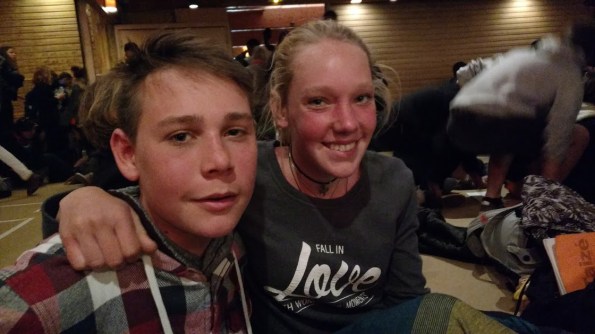
I arrived at Taize for Sunday morning worship on April 23. Two of the first people I met were Toby and Annika. For me, they epitomize the best of the Taize experience. The two are young, 16 and 18 respectively. Both have a sincere faith. Both are altar services in their Roman Catholic church in Cologne, Germany. Both are very kind. They gave some old, Protestant pastor from America pointers and advice as he entered his first Taize experience. Toby even gave me a ticket for a free crepe at the Oyak (like a camp store).
There was much confusing about that initial plunge into the Taize experience. However, Toby and Annika demonstrated to me from the beginning that there was something special happening there.
What is the Taize?
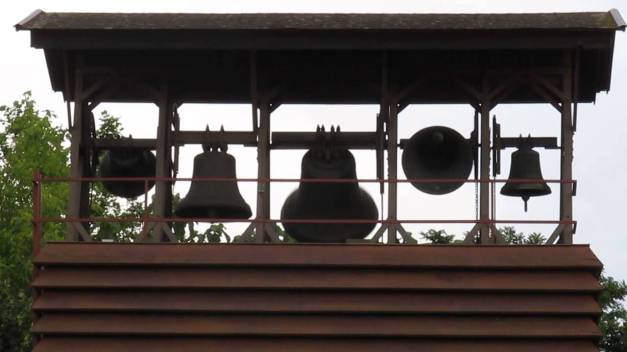
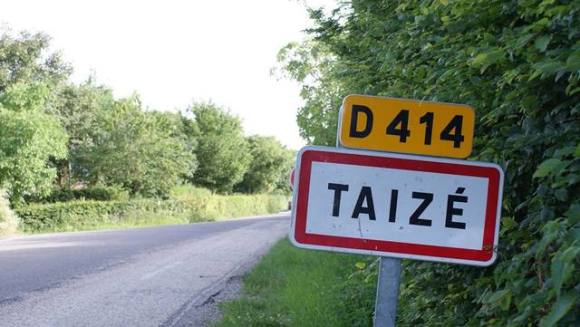
Taize is a small farming village in France. It was the place where Brother Roger established an ecumenical monastic community after World War II. Usually, we think of monastic communities as strictly Roman Catholic. However, there is a mix among the brothers of both Roman Catholic and Protestant. The brothers make lifelong vows of chastity, poverty, and obedience.
The curious thing about Taize is that the community was discovered by young people. By the early 1960s, young people were making pilgrimages to the community to join the brothers for a season of prayer and conversation. Thousands of people, church groups and individuals, will find themselves living in tents and cabins this year at Taize. They will eat together, pray together, and listen together.
Worship Experience
At the heart of the Taize community is the experience of worship. Three times a day, the community gathers in the Church of Reconciliation for prayer. The services are simple and multi-lingual. There is Scripture, prayer, and song.
Most people who know about Taize know about the songs. They are short, repetitive refrains. Perhaps, it could be a few sentences of Scripture breathed in and out. People find the songs centering and calming. At our congregation, we have used some of these songs for vespers services during times of the year or now even on Sunday morning.
I love the fact that the services are multi-lingual. There is something wonderful about so many people from so many places gathering to worship God in Jesus Christ. However, personally, I find singing new songs in Dutch, Spanish, Latin, French and German a little challenging. After a few worship services, I found myself simply repeating the lyrics in English and reflecting on them rather than singing every song.
The best attitude to take in a Taize service is not to participate in every part. Let the Holy Spirit move you. Sometimes you will be active. Sometimes you will be passive, allowing the elements of the service to affect you.
As a good Reformed Christian, I find the lack of Scripture teaching and preaching a little dismaying. However, I would argue that the daily Bible studies led by the brothers and small group reflections serve that purpose. One should view the whole day as worship rather than just the time in the Church of Reconciliation.
The Role of Community
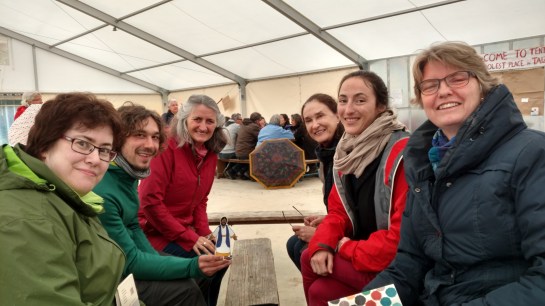
Very soon after people arrive at Taize, there is an effort to gather them into small groups for Bible study and reflection. These same groups will often share jobs during the week as well. These could include helping with the distribution of food, washing dishes or even cleaning bathrooms.
In my group, we had people from Belgium, Switzerland, the Netherlands, France, Czech Republic, and Australia. We had devout believers, interested fellow travelers, and sincere questioners. In my short time there, we wrestled with the meaning of forgiveness, the nature of Jesus Christ, and applying the faith to our own lives.
Taize is about relationships–our relationship to God and each other. To get the most out of the experience, one needs to form connections fairly quickly. That’s probably why many travel to Taize in groups. They already have the benefit of existing relationships. Otherwise, a participant needs to be gregarious. Taize would be tough for an introvert.
The Language Barrier
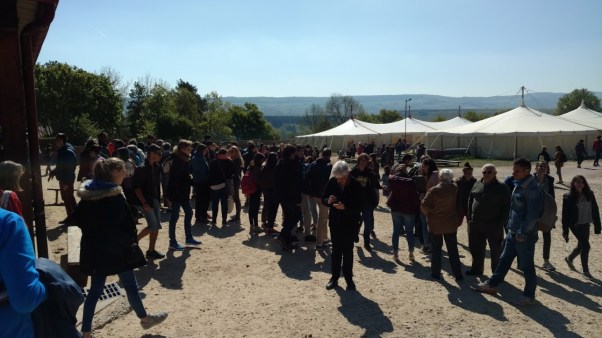
The language barrier is real. Everyone that I have met has been very accommodating and kind. It is amazing how much can be communicated when folks share a common faith in Jesus Christ. People are very patient and loving. There is certainly a lot of laughter. Nonetheless, it’s frustrating when you can’t understand or cannot be understood. Pentecost was probably the best possible miracle for the early church. Christ came to tear down the walls that divide us from each other and from God. Language is certainly one of those walls.
Not Good for a Bad Back
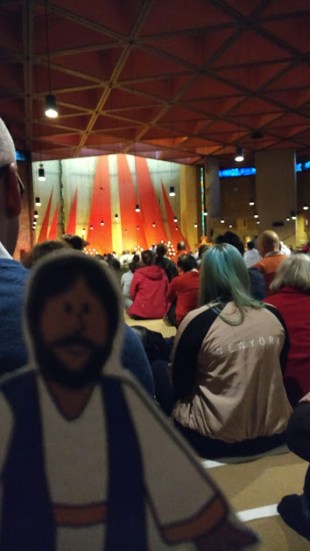 Taize is not a place to go with a bad back. Before Easter, I injured my back, and after a difficult Holy Week, I almost had forgotten the pain I had experienced. However, Taize constantly reminded me. Most worship seated on the floor. There are very few places to sit other than hard wooden benches or concrete. The beds are incredibly uncomfortable.
This led to some interesting observations. During worship, I sought out one of the few benches along the periphery of the church. The view isn’t that great, but I prefer less pain. These benches were also the home of those youth who particularly didn’t want to be there. They were forced to come along with their church youth group. Sitting near me was the eye-rolling boy from Germany, the class clown from France, and the flirtatious young lady from Switzerland. These were not the most devout, but even they had an openness to God’s movement.
In a conversation with one of the brothers, we both observed that in today’s generation there is receptivity to the faith. They may not have the vocabulary to express their longings or their experiences of the divine. Nonetheless, there is something there. A generation or two ago, young people were rebelling against the church. Now the church is real counter-culture.
What are You Taking Home?
In my conversations with others at Taize, there was a question that I kept asking, “What are you going to take home from this experience?” At one point, someone threw the same question back at me. It was harder than I thought it would be. I think what I will take back is the questions.
The participants are from all over the world, yet there is clearly some spiritual challenges that reveal themselves over and over again: What brings my life meaning? How do I escape the trap of the expectations of the culture, my family, etc? How do I stay connected to a greater reality in this crazy world? What role does family, career or sexuality play in my identity? What is our responsibility to the poor? How do we make a difference? Where is God in all this?
Those common questions and the answers that we discover in our Christian faith provide a challenging agenda for the church.

 Pastor 139