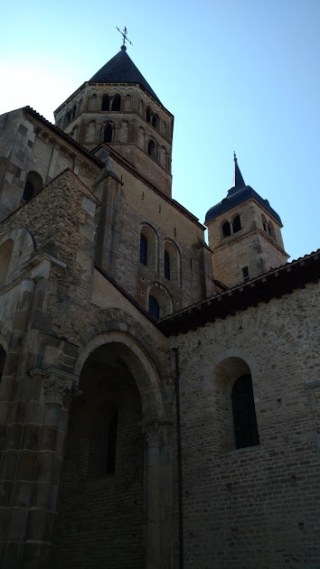
 For the past couple of days, I’ve been visiting Cluny which is north of Lyon, France. It’s a beautiful rural, small village which once was one of the most important places in Europe.
I’ve already written about how the monastic movement kept the Christian movement going by recovering and perpetuating sacred texts. The movement also provided cultural stability during the turbulent times after the fall of the Roman Empire. They also provided needed support for the poor and sick in those communities.
That being said, not all monasteries were equal. The quality and faithfulness of those monasteries could vary wildly. Folks like St. Columba in Scotland and St. Benedict in Italy tried to create a systematic rule of life for their communities. For example, St. Benedict’s Rule has been a standard for monastic communities since it was written in the Sixth Century.
However, by the height of the Middle Ages, there was a new challenge. Monasteries needed land. As a result, the monasteries were becoming ever dependent on the arising feudal lords. Those lords were often exercising power over the monasteries including internal practices. Some lords taxed the monasteries into poverty. Others influenced them to modify St. Benedict’s Rule, lowering their standards. As a result, the monasteries went into decline.
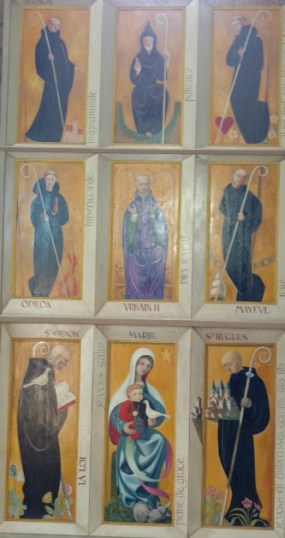
In the early 10th Century, William the Pious, the duke of Aquitaine and count of Macon in France, made a deal with the church. He would give away his villa at Cluny to the church for a monastery. What was different about this deal was that Cluny would remain independent from his influence. The Rule of St. Benedict would be strictly enforced, and the lands were rich enough to make the monastery sustainable. William probably hoped that such a deal would secure his eternal soul.
The Abbey of Cluny had some smart abbots who leveraged their position well. Soon other monasteries began to ally themselves with the independent Cluny. They also began to start new monasteries. Eventually, the Abbey of Cluny created a network of monasteries in France, England, Spain and Italy. The pope even gave the abbey a special dispensation to bypass existing bishops to run the other monasteries directly.
Cluny began to rival Rome as the center of power of the Christian church. At its height of influence, 1184 other monasteries were allied with Cluny. From the 12th Century to the 16th Century, the largest church building in Europe was in Cluny, even larger than the Vatican. Over the years, the Abbey at Cluny produced popes and saints. The monasteries became knowns for their liturgy, music, reflection on Scripture, and helping the poor.
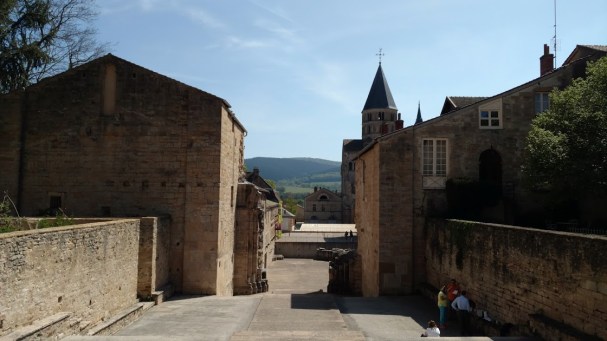
However, the Cluniac reform movement was a victim of its own success. The network grew too large. They couldn’t maintain centralized control on all those monasteries. Likewise, they became corrupted by their great wealth and power. Other reformers saw the Cluniac monasteries as losing touch with the Gospel. Eventually, the power of Cluny waned. After the French Revolution, the revolutionaries dissolved the monastery and tore down many of the buildings.
The history of Cluny reveals that spiritual reforms must be made concrete. The Gospel must be incarnational. However, Cluny also teaches that heart of any reform movement must remain the good news of Jesus Christ. The concrete must be guided by the spiritual.

 Pastor 139