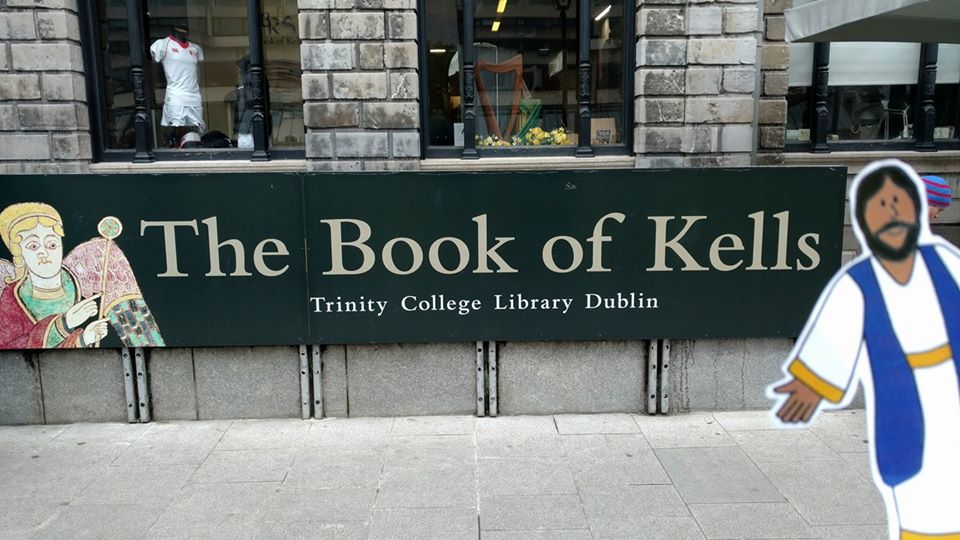
It was around the Eighth Century. Scotland and Ireland were on the frontier of the Christian world, and with the fall of the Roman Empire, Christian influence on the culture began to wane. It was the monastery system which preserved and protected the tradition. In scriptoriums, monks copied and illuminated sacred texts of the faith.
On the isle of Iona off the coast of Scotland, a group of monks created a set of the four gospels based on the Latin text of Jerome. In a time before moveable type, the monks went to great lengths to create this series of the four gospels. They say that it took the hides of 185 calves to make this book.
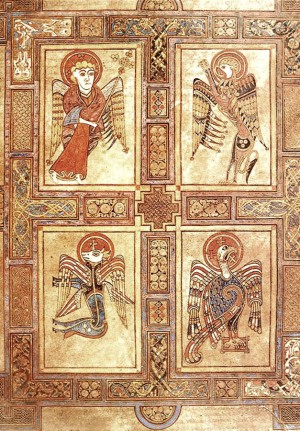 The artwork is exquisite and detailed as the monks tried to bring insight to the text. It also was culturally expressed. The monks used techniques and subjects common to Celtic artwork to illustrate the gospels. It is a great example of how Christians try to use the gospel to redeem the culture around it.
Due to Viking attacks on the Iona, the monks moved the book to a monastery in Kells, a small town in County Meath of Ireland. Hence the book became known as the Book of Kells.
Eventually, the Book of Kells made its way to Trinity College in Dublin where the library displays a different page each day. The book has been placed under special protections, and no visitor can take a picture of any of the pages. Nonetheless, the Book of Kells remains an amazing sight. I appreciate the artwork, but I have even more appreciate the love and dedication to the Scriptures.
We sometimes call this period of time, the Dark Ages, but if it wasn’t for monks like those at Iona and Kells, the age truly would have been dark. They believed that preserving the wisdom and truth of the past ensured a bright future.
Every major reform movement of the Church has begun with a look to the Scriptures. I would argue that the challenge we face today would best be addressed by taking the Scriptures as seriously as did that group of monks on the edge of an empire.

 Pastor 139
One thought on “Book of Kells”