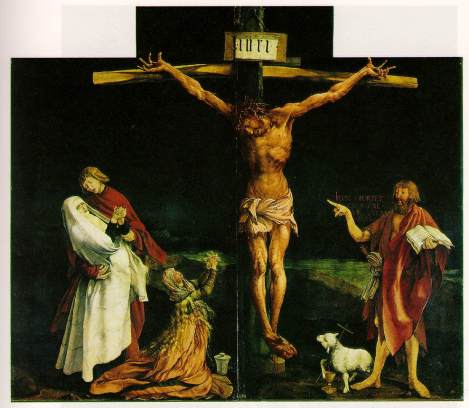
 In the midst of Lent, it is probably helpful to think again about the problem of pain. The question has surfaced again because of circumstances. I have watched people I care about suffer with disease, death, and economic uncertainty. As a pastor, I have also received questions which deserve answers. My response here is not new, but you did not come here for originality.
It is clear that some people in life seem to have more than their share of garbage. Personally, I don’t understand why this happens. I know the reasons that are given. The one that I carry with me is that the life itself is tragic. God’s good creation is corrupted or flawed. Even the story of Adam and Eve speaks more to fact that evil and sin are present in the world rather than a coherent explanation of how or why.
That being said, I can stand strongly on the fact that evil is not part of God’s original plan. Evil, suffering, and sorrow are not God’s intention for the world. God’s demand for justice is real, and ultimately evil will fail. Being chosen or favored by God doesn’t mean that we are exempt from suffering. We cannot escape the corruption of this world. In fact, those who faithfully follow God might experience more intense suffering since we know that this world is really messed up. Our eyes are open to the actuality of evil. Our hope remains because we know that in the end, God will triumph. The glimpses of that victory here and now help sustain us in the meantime.
This is one of the themes of the Old Testament. The people of Israel with whom God made covenant were to be witnesses of what God intended. In spite of suffering (and even through it) the people of Israel remain a light to the nations to demonstrate that the cynics are wrong.
Beyond this point, my understanding is firmly rooted in my Christian faith. For me, I just can’t escape it. We believe that Jesus’ own suffering brings redemption. Jesus plays the tragic game of the world, and he gets killed for it. His resurrection from the dead is a victory over the game, and he demonstrates the absurdity of the game. God reveals in Jesus Christ that we have been playing by the wrong set of rules. Instead of a tragedy, life is really a comedy. We are defined not by death and destruction. Instead, our identity is rooted in the depth of God’s love and grace. As followers of Christ, we share in the joy of deliverance.
However, deliverance from evil is not an escape. Our faith is not an opiate to deaden the pain. Like the chosen of Israel, we continue to witness to God’s love. In the midst of suffering, it is our calling to stand with those who are hurting most. We offer love, forgiveness, and hospitality to those affected by evil. By caring for others, we serve in a cosmic resistance movement. We respond directly to the lies of the world.
I realize that this analysis doesn’t answer the question why, but it might suggest where do we go from here.
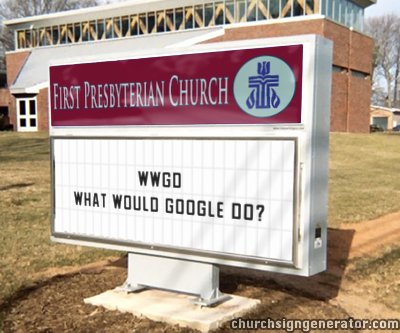 Jeff Jarvis takes great satisfaction that the title of his new book on Google mocks the “What Would Jesus Do?” merchandising of a decade ago. Although the joke is rather old for someone who desires to be on the cutting edge of the internet age, Jarvis has some fascinating observations of the new paradigm that Google has created. He then applies his observations to a variety of businesses, industries, and organizations. Here Jarvis asks,
  Pastor 139